

Early life stress linked to lasting gut-brain changes and pediatric GI disorders

New research reveals how adverse experiences in early life may rewire gut-brain pathways, increasing long-term risk for disorders of gut-brain interaction.

Gut-brain-changes-and-pediatric-GI-disorders

A new paper published in Gastroenterology shows that early life stress can disrupt gut-brain development and increase the risk of disorders of gut-brain interaction.

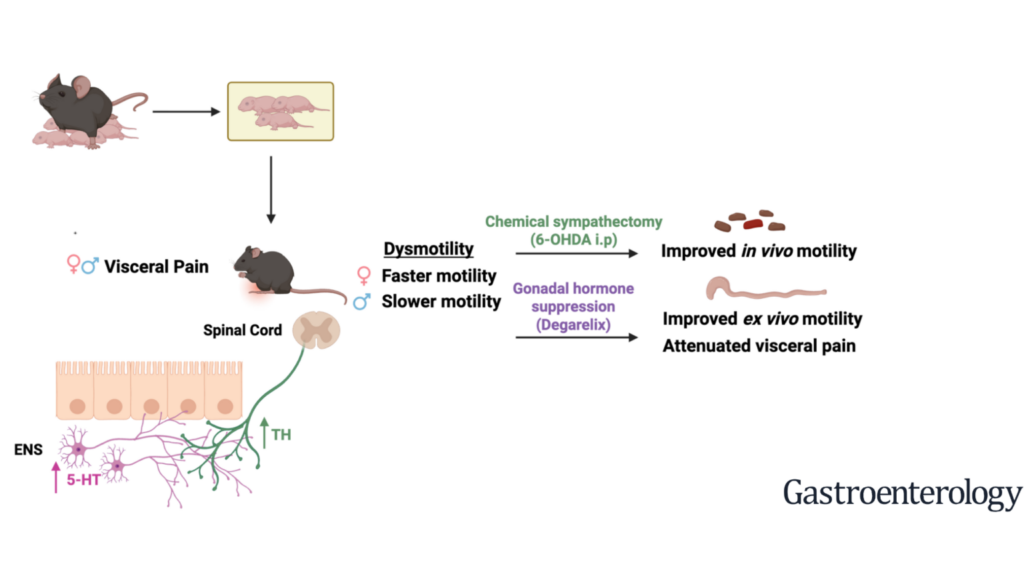
Using a mouse model, researchers found that early stress increased gut sensitivity, sex-specific problems with intestinal movement, and led to lasting changes in the gut’s nervous system.

These findings were supported by data from two large pediatric cohorts, which showed that maternal mental health problems were linked to a higher risk of pediatric disorders of gut-brain interaction. The consistency between preclinical and human data underscores the lasting impact of early-life stress on gut-brain pathways.

Takeaway:

Together, the results indicate that early-life stress can alter gut nerve function and signaling, increasing the risk of disorders of gut-brain interaction, suggesting new approaches for prevention and treatment.

Read the full Gastroenterology paper.

Meet a co-author

AGA is proud to recognize co-author Daniel Juarez. In 2024, the AGA Research Foundation selected Daniel for the AGA-Dr. Harvey Young Education & Development Foundation’s Young Guts Scholars Program. He credits AGA’s undergraduate research program with kick-starting his research career and connecting him with mentors and collaborators involved in work like this study.

"The AGA Young Guts Scholars Program was an incredibly meaningful experience during my undergraduate training. It not only provided critical research support but also allowed me to build meaningful connections with leading researchers in gastroenterology. Through the program, I had the privilege of working in Dr. Kara Margolis’s lab and contributing to several exciting projects. With the incredible mentorship of Drs. Margolis, Lin Hung, and Sarah Najjar, I have had the opportunity to explore how gut serotonergic signaling influences pain, behavior, and gut motility, including contributing to our recent paper on early life stress. I’m incredibly grateful to have been part of the Young Guts Scholar program and especially thankful for the mentorship and support of Dr. Harvey Young."

Daniel Juarez
AGA Research Foundation
Privacy Overview

This website uses cookies so that we can provide you with the best user experience possible. Cookie information is stored in your browser and performs functions such as recognising you when you return to our website and helping our team to understand which sections of the website you find most interesting and useful.